
How might we support battery monitoring in a busy hospital environment?
Providing hospitals a solution to quickly identify potential danger before posing a huge risk on healthcare workers and patients.

Jump to solution
Duration
1 year 2 months
Jul 2025 - Present
STATUS
In development
Q4 2026 deployment
ROLE
Product designer
COMPANY
DT Research
Skills
User research
User interviews
Rapid prototyping
Usability testing
Cross-functional collaboration
Tools
Figma
Claude
Notion
Microsoft Word
Background
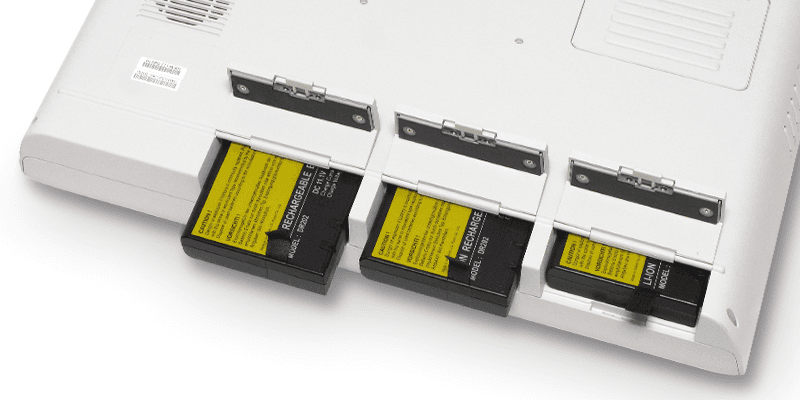
Hospitals manage hundreds of hot-swappable batteries, up to ~1800 in a span of 6 years, that must stay operational at all times.
Challenge
Currently, there is no support for battery monitoring in hospitals.

Goals
Minimize battery-related accidents on field
Maximize battery performance
Solution Overview
Introducing DTR Battery Fleet Manager, a robust management solution that supports healthcare works with monitoring.
Dashboard
Providing bird's-eye fleet view for quick glance monitoring.
The dashboard displays rich data visualization of relevant attributes, including battery health and state of charge, and alerts.

Fleet List
Surfacing unhealthy batteries for actionable next steps.
The Fleet page is split between Battery and Device lists for better organization and granular visibility into each object.
Battery List

Device List

*Wamee is one of DT Research's close client
Settings Page
Configuring and adapting system to fit hospital's needs.
Settings page

Needs
Through user interviews and usability testing sessions, I've identified concerns users .
"Minimize battery-related accidents on field"
"Maximize battery performance"
Mapping User Journeys
The already tedious navigation process is further complicated by TMP's current website.

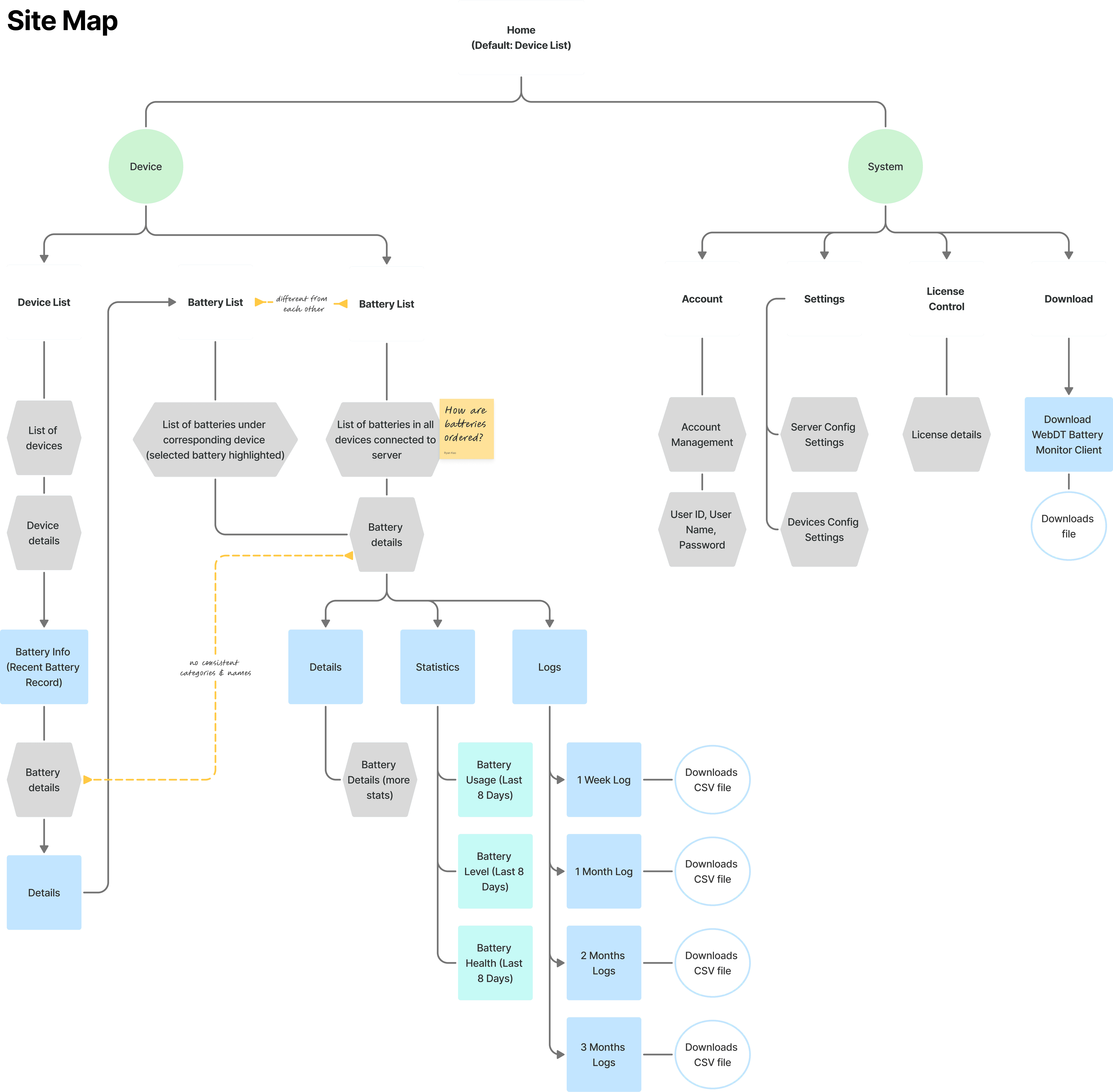
After mapping out the user journeys, I was able to begin planning the architecture of the software, with support from competitive analysis and prior feedback.
Opportunity
Address technical bugs on the current website to enable immediate access to resources and better support user independence with search and discovery.
0->1 Design System
Users value search assistance to support their exploration.


Values
Users want immediate access to resources, recommended resources that cater to their needs, and credibility by seeing how the resources are helpful to other programs.
Iterations
I analyzed user interviews and usability testing sessions, five stages users typically go through when searching for resources.

Impact
Presented at HIMSS tradeshow for teaser
Won contract and discussed iterations and presenting final designs with our client
>200
unhealthy batteries
Identified during beta testing by our client
After consulting with developers and designers, we developed a thorough short- and long-term implementation plan to hand off to TMP, detailing essential website issues that needed to be addressed right away and complex features for implementation later.
Next Steps
Communication is an essential skill for agility and negotiation.
This project gave me valuable insights on how communication was key to working cross-functionally more effectively. We had to balance organizational goals with user preferences in order to deliver a powerful solution that impacts both.
1.
Good design is heavily research-backed
Conducting extensive research really benefited our team to utilize our collected data to guide our product vision.
2.
Small improvements drive big impact
While the Resource Navigator was simply a package of website improvements, these quality-of-life changes led to greater usability and aligned with TMP goals and budget.
I want to thank every one of my team members who made our project experience so valuable and healthy!
Thanks for reading!